Yield, don't resist
Rather than opposing force, judo teaches you to leverage an opponent's momentum, balance and force against them. By yielding to direct force, a smaller practitioner can control and subdue a larger one.
What Is Judo
At The Judo Lab we believe that to master the physical techniques of judo, you must first understand its purpose, origin and philosophy. Judo is far more than a martial art or an Olympic sport — it is a system of physical education, mental discipline and human development, and we teach it that way.
The name
柔道
Jūdō · The gentle way
Founded in Japan in 1882, judo translates directly to the gentle way.
柔 (jū) — gentleness, flexibility, adaptability, yielding.
道 (dō) — the path, the way, the principle.
Rather than opposing force, judo teaches you to leverage an opponent's momentum, balance and force against them. By yielding to direct force, a smaller practitioner can control and subdue a larger one.
The dō reminds us judo is a lifelong path of development — physical, mental and ethical — not a collection of techniques to be collected and forgotten.
The technical core
At its technical core, judo is an unarmed martial art. Where other arts rely on striking or brute strength, judo rewards timing, leverage and control — the same qualities we measure in the lab.
Throwing techniques — taking balance and projecting the opponent to the mat.
Grappling pins — holding and controlling on the ground.
Joint locks — applying controlled leverage to the elbow.
Chokes — submitting through safe, disciplined pressure.
The founder
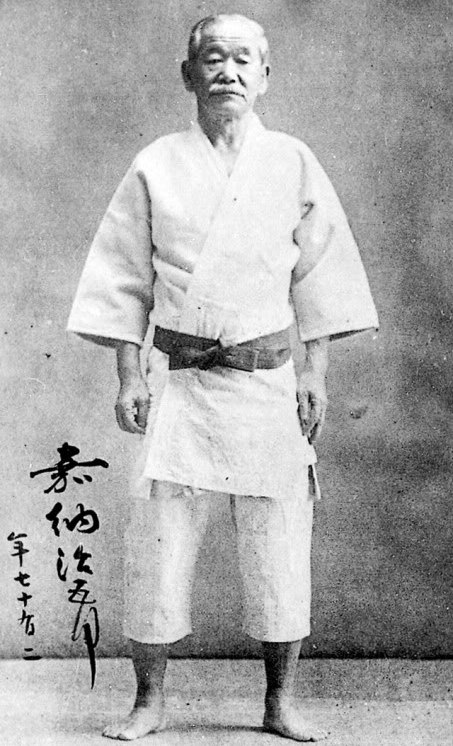
Judo was created by Professor Jigoro Kano (1860–1938), a scholar, educator and visionary. As a young student in Tokyo he was physically small and frequently bullied. Seeking self-defence, he studied traditional Japanese jujutsu — the battlefield combat systems of the samurai — mastering two major classical styles: Tenjin Shinyo-ryū (striking and grappling) and Kito-ryū(throwing).
Kano recognised that classical jujutsu, while effective, was dangerous to practise safely, lacked a unifying educational philosophy, and was declining in a modernising Japan. He stripped away the lethal moves, refined the safest and most efficient techniques, and transformed a system of destruction into a system of personal growth.
He did not create judo merely to teach people how to fight. He designed it as an educational framework to build healthy, moral and capable individuals who could contribute positively to society.
Built on two principles
Kano distilled the foundation of judo into two core principles. At The Judo Lab we wrap our house concept,Jiku ga burenai — the axis does not waver — around them: a steady axis is how an athlete lives out both.
精力善用
Seiryoku Zenyō
This principle governs both technique and daily life — using physical, mental and spiritual energy in the most intelligent, efficient way possible. On the mats it means redirecting force rather than opposing it; off the mats, solving problems with clarity and poise. A wavering axis wastes energy; a steady one spends only what the task requires.
自他共栄
Jita Kyōei
Kano believed individual growth is meaningless if it harms others. True progress occurs when training partners work together to improve one another. Respect, humility and cooperation are mandatory — you cannot learn judo alone, and your partner's safety and development are as important as your own.
The Kodokan · 講道館
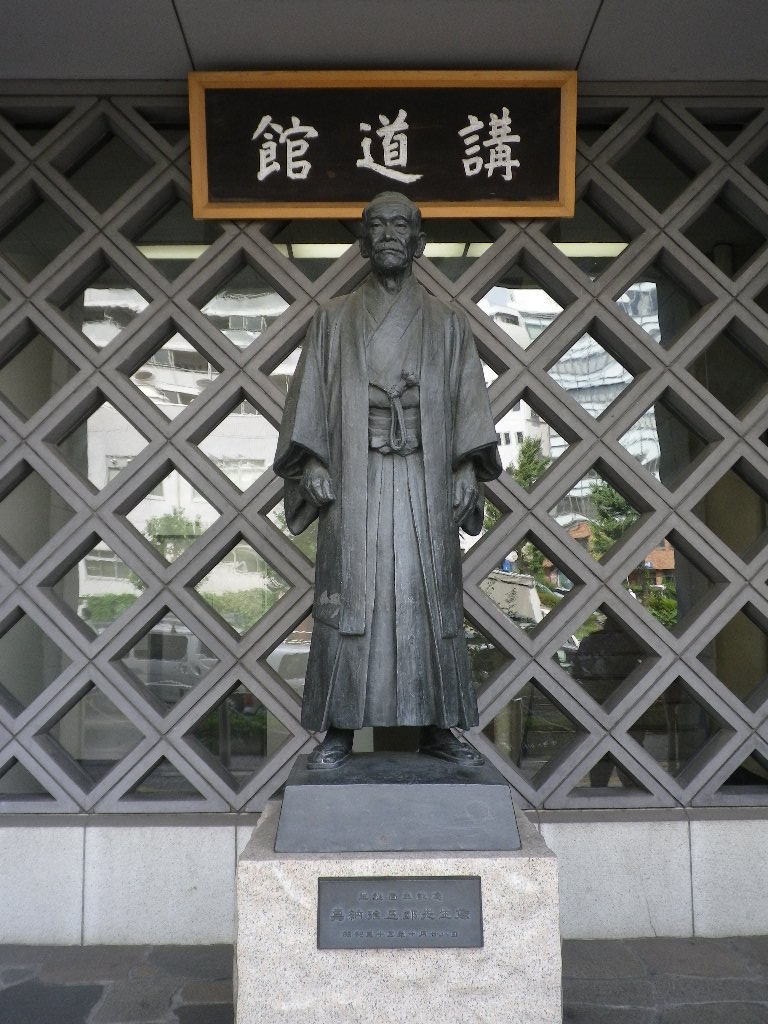
In May 1882, Kano established his own academy at the Eishō-ji Buddhist temple in Tokyo and named it theKodokan (講道館) — a place for studying the way. It began in a modest room with nine students and twelve tatami. Through rigorous technical testing, philosophical refinement and victory in public demonstrations against traditional jujutsu schools, Kano's system gained rapid renown.
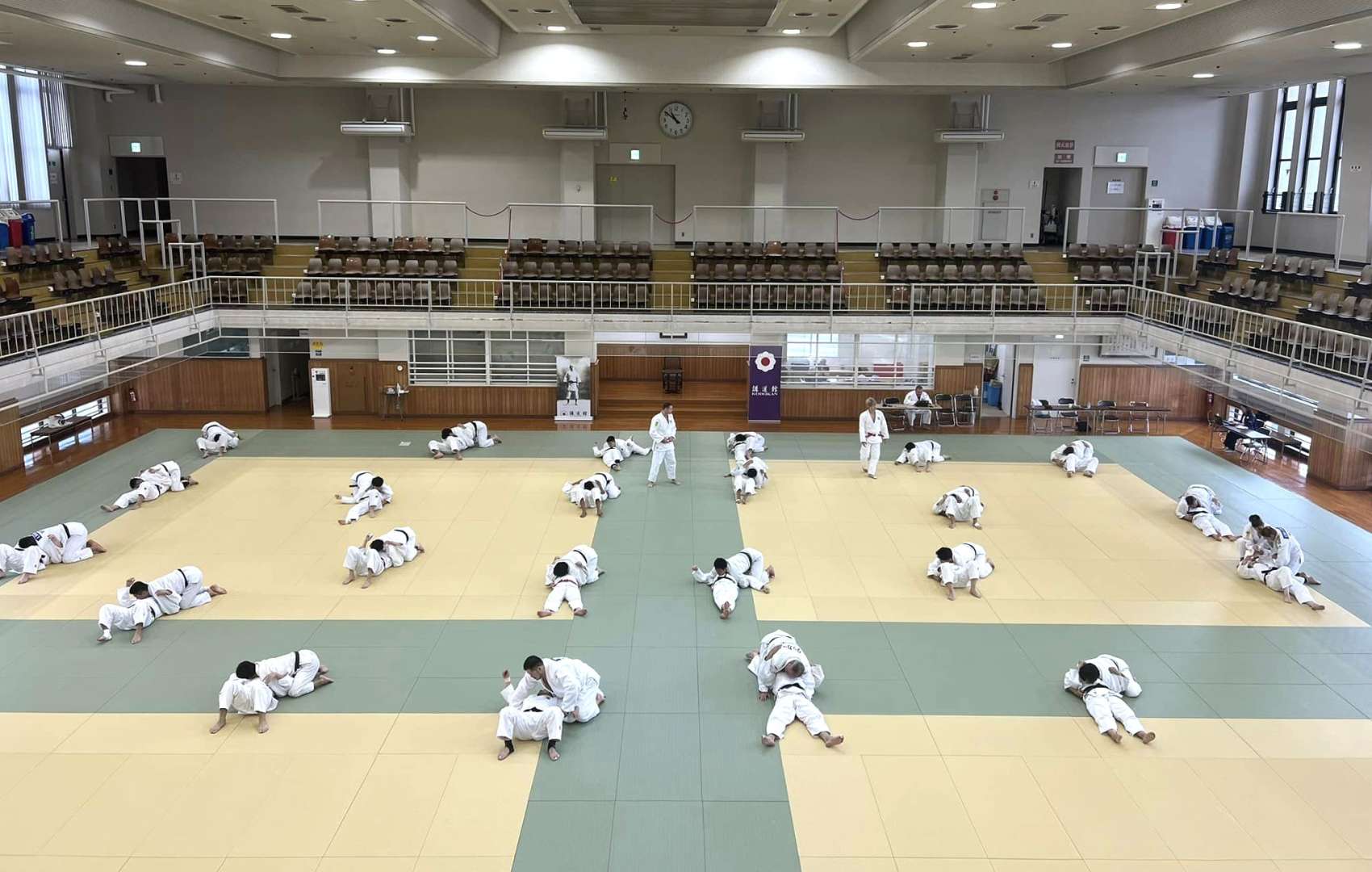
Today the Kodokan in Tokyo stands as a multi-storey complex and serves as the international headquarters of judo — the global standard-bearer for technical excellence, kata preservation and traditional judo values. The Judo Lab carries that standard into a modern, welcoming Brisbane dojo.
Three pillars of development
Kano became an influential figure in modern Japanese education and the first Asian member of the International Olympic Committee. He designed judo to fulfil three pillars of development — the same three we measure every athlete against.
鍛錬法
Rentei-hō
A complete body workout — functional strength, cardio capacity, flexibility, balance and core stability. Central to judo is Ukemi (受身), the art of falling safely, which builds spatial awareness and protects practitioners on and off the mat for a lifetime.
修錬法
Shubyō-hō
Through Randori (乱取り) — controlled live sparring — practitioners face pressure, uncertainty and fatigue. Judo teaches you to keep your composure under stress, adapt instantly, and treat failure not as defeat but as data for improvement.
人格形成
Kushū-hō
Every session begins and ends with a bow (Rei · 礼). Respect for instructors, partners and opponents is non-negotiable. The discipline, modesty and integrity cultivated on the tatami transfer naturally into academic, professional and personal life.
Your first move